
We breathe because of them. We write on them. We build with them. We eat from them. And in the mountains above Castroreale, we are working to make sure they survive.
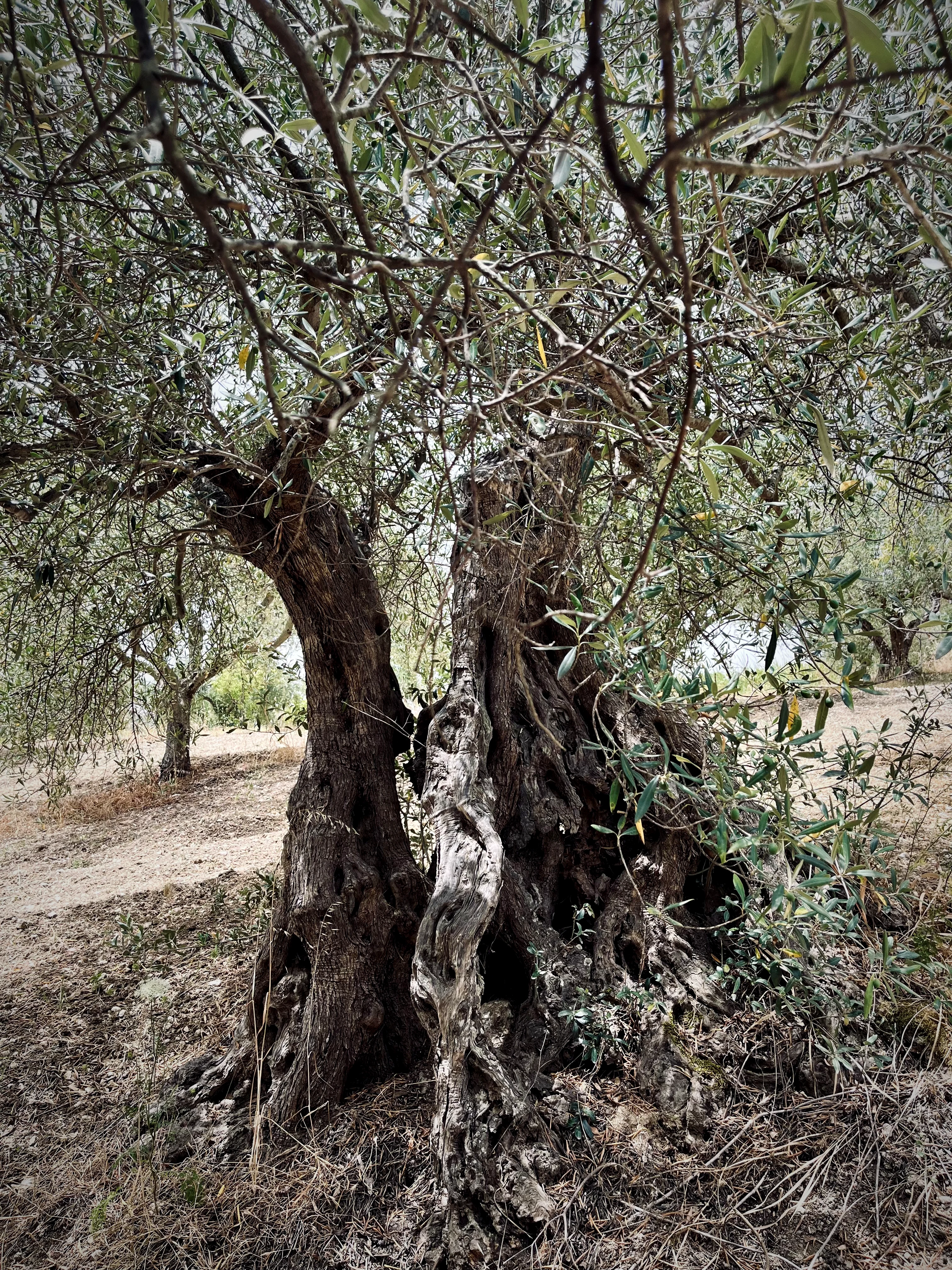
The oxygen in your lungs right now was made by a tree. Not a metaphor — a single mature tree produces enough oxygen to sustain four people for a year. A grove of ancient trees is an oxygen factory that has been running, without interruption, for centuries.
The wood that built every civilisation came from trees. Paper — the medium through which human knowledge was recorded and transmitted for millennia — is made from trees. The first books, the first maps, every signed constitution. All written on tree.
Trees stabilise soil and prevent erosion. Their root systems hold hillsides together, slow flooding and replenish groundwater. An ancient olive grove on a steep volcanic terrace is not decorative — it is structural. Remove the trees and the terrace fails.
"A society grows great when old men plant trees whose shade they shall never sit in."
Greek proverbTrees sequester carbon across their entire lifespan — some of ours have been pulling carbon from the atmosphere since before the Norman conquest of Sicily. Their loss is not just the loss of a tree. It is centuries of stored carbon suddenly released, and the beginning of erosion on volcanic hillsides that follows abandoned terraces.
"The olive tree is not a tree.Attributed to Aldous Huxley, on the Mediterranean
It is a civilisation."
From Minoan palace storerooms to the Garden of Gethsemane, from Homer to Roman legionnaire rations — the olive has accompanied civilisation since before written records. Click any era to read more.
Archaeological evidence places the first systematic olive cultivation in the eastern Mediterranean. The Minoans built commercial power on olive oil — sealed clay jars have been recovered from palace ruins at Knossos.
According to myth, Athena and Poseidon competed to name Athens. Poseidon struck rock and salt water sprang up. Athena struck it with her spear and an olive tree grew. The citizens chose the tree.
In Genesis, a dove returns to Noah's ark carrying an olive branch — the first sign land had returned after the flood. The olive branch has symbolised peace ever since. The prescribed oil of anointing in the Hebrew Bible was olive oil.
Rome did not merely consume olive oil — it used the olive as an instrument of colonisation. Wherever Roman legions conquered, they planted olives. Sicily became one of the Empire's primary agricultural territories.
The Arab rulers of Sicily transformed its agriculture. They introduced qanat-style irrigation and agronomic knowledge from the eastern Mediterranean, expanding olive cultivation into mountain valleys previously considered too marginal.
The Greeks did not plant olive trees in Sicily — they found them here and planted more at scale. When sailors from Chalcis founded Naxos in 734 BC, the Peloritani mountains behind present-day Messina were already producing olives. The Arab rulers (827–1072 AD) introduced sophisticated irrigation and systematically expanded planting into the mountain valleys inland from Messina.
Then came successive regimes — Norman, Swabian, Angevin, Aragonese — each leaving its mark on the valley while the trees continued growing. The isolation of the Peloritani ridges (cutting the valley off on three sides) meant varieties that took root here stayed here, shaped over centuries into something found almost nowhere else on earth.
Founded in 1324 by Frederick II of Aragon, built on a ridge already inhabited from the Bronze Age. The castle walls and a single surviving tower still stand. Some of the olive trees now growing above the town predate the castle that gave the town its name.
The Castriciana Rapparina — also called the Castricianella, and known locally as Nustrali ('ours' in the Sicilian of Castroreale) — descended from olive stock that arrived during the Arab period. It encountered the Peloritani's particular conditions: volcanic basalt and calcium carbonate soils, elevations between 180 and 450 metres, cooler winters than the coast.
Over centuries of cultivation — pruned each winter by the same families, pressed in the same mills — the variety differentiated. Its fruit is small. Its oil is intense: unusually high polyphenol content, a bitterness and long peppery finish that comes from the altitude and volcanic soil. Not a commercially convenient olive. But as a source of exceptional, verifiable oil from a specific place — there is nothing comparable.
"Registered in the Italian National Register of Olive Varieties. Centre of origin: Castroreale, Messina province."
Our Guardian adopters take stewardship of one of fewer than twenty Castricianella trees available for adoption in the entire grove. The single-cultivar oil — pressed separately, unblended — will be released for the first time in 2027 or 2028.
The Nustrali story →A thousand-year-old tree can die of neglect in a decade. This is why it is happening across Sicily — right now.
As farming communities age and younger generations move to cities, the knowledge and labour needed to maintain ancient groves disappears. Entire hillsides cultivated forty years ago are now overgrown. Once a grove is overgrown it takes years to recover. Many are not recovered.
Traditional hand-harvesting of ancient trees on steep terraced ground cannot compete on cost with industrial operations in Andalucía or Tunisia. Without a market that rewards provenance at a premium covering the real cost of this work, the economics do not function.
Pruning an ancient olive tree correctly is knowledge that passes from person to person — learned in the field over years, not from a book. When the people who carry it stop farming, it disappears. Wrong pruning destroys harvests or damages trees that have stood for centuries.
Rare cultivars like the Castriciana Rapparina grow in very few places. If the groves in those places are abandoned, the variety cannot be replanted elsewhere and produce the same result. The specific genetics, shaped by centuries of local selection, are simply gone.
Longer droughts and irregular rainfall place additional stress on already under-resourced groves. Ancient trees with deep root systems are more resilient than young plantings, but they still require active management. Abandoned trees facing climate stress are doubly vulnerable.
The typical Sicilian olive farmer is in their seventies. There is no succession plan and no next generation in training. Three million trees — not destroyed, not diseased, just no longer tended. Which amounts to the same thing, given enough time.
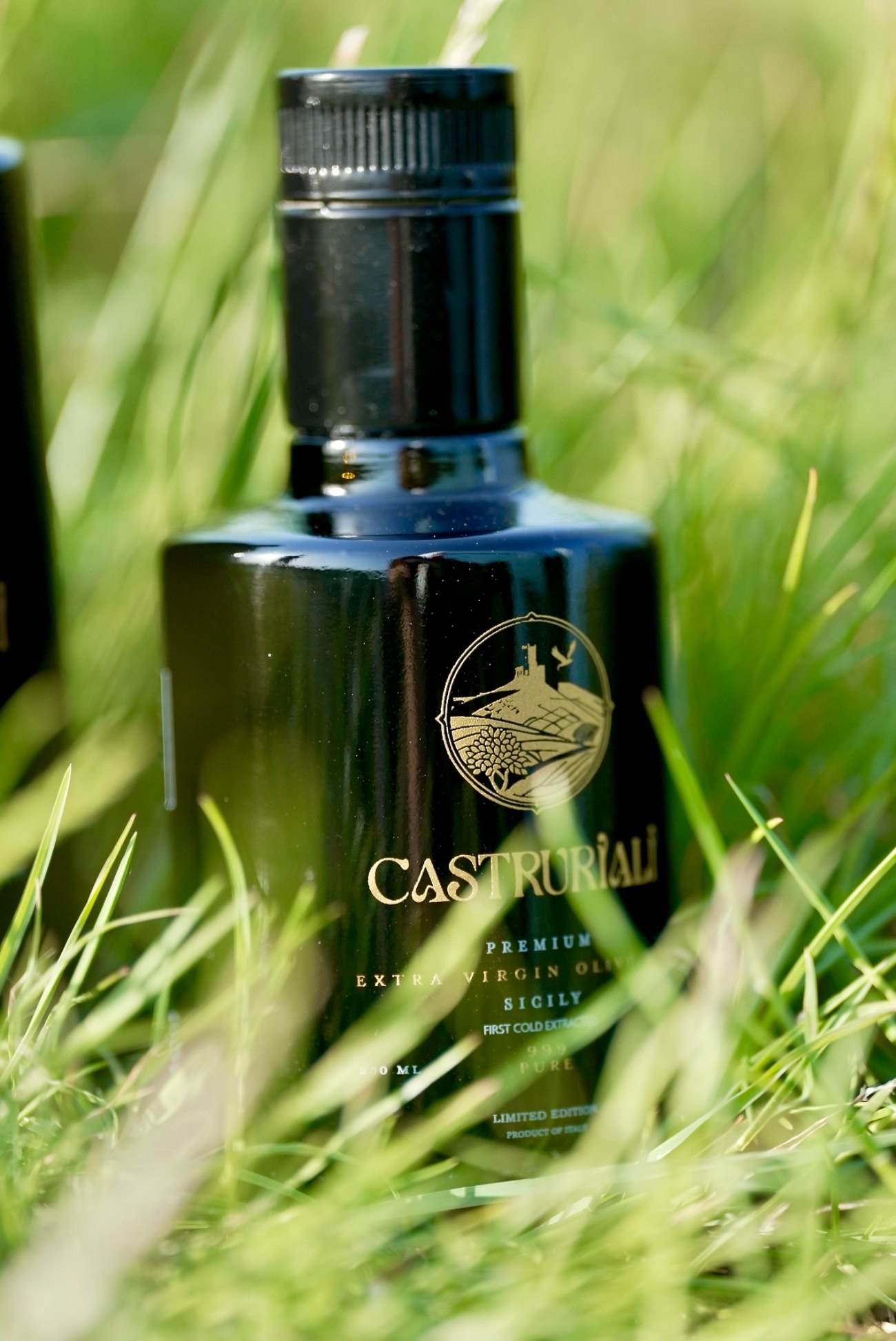
The grove above Castroreale sits on volcanic terraces between 180 and 420 metres in the Peloritani mountains. Basalt and calcium carbonate soil — volcanic mineral wealth laid down over millions of years. On a clear winter day, the Aeolian Islands are visible from the upper terraces. The trees have been growing here longer than anyone alive can account for.
We hold five cultivars: the Castriciana Rapparina (facing extinction), Ogliarola Messinese (ancient to this valley), Nocellara, Cerasuola and Biancolilla. Together they produce an oil specific to this elevation, this soil, this mountain.
"The trees have been growing here longer than anyone alive can account for."
The adoption programme funds pruning, cultivation and propagation that keeps these groves alive. Each adoption is a direct investment in a specific tree — and in the centuries it has been working to be here.
There is no month in which the grove is simply left alone. Active cultivation is not optional — it is what keeps a thousand-year-old tree alive.
Olives are hand-picked at veraison — just as the fruit begins turning from green to violet — for maximum polyphenol content. Pressing happens the same day at the Mandanici mill.
Each tree is assessed individually. Old wood removed to encourage new fruiting branches and light into the canopy. In an ancient tree, pruning requires knowledge that takes decades to acquire.
New shoots emerge. Terraces are cleared. Young trees planted alongside ancient stock. Grove reports and harvest letters dispatched to adopters. The grove at its most active.
Olives swell through the long dry Sicilian summer. Ancient trees access moisture through deep roots that younger trees cannot reach. The grove waits under full Sicilian light.
Adopt a specific, ancient olive tree growing above Castroreale. Receive oil pressed from your own harvest each autumn. Visit the grove when it opens to Friends.
Letters from Castroreale — the harvest, the mill and the trees we are bringing back to life.