
Sicilian Recipespoured in green gold.
30 authentic recipes from every corner of Sicily, from Palermo’s street food to Messina’s swordfish and Catania’s pasta alla Norma: tested methods, real quantities and the story behind each dish.
Sicilian cooking in brief
Sicilian cooking is the food of an island that Greeks, Romans, Arabs, Normans and Spaniards all ruled, and each left something on the table. Durum wheat, olives and wine came early; citrus, sugar, rice and the taste for saffron, raisins and pine nuts are usually traced to the Arab centuries; tomatoes and peppers arrived from the Americas under Spanish rule. The result is cooking built on extra virgin olive oil, fish from three seas, vegetables, sheep’s-milk cheese and a love of agrodolce, sweet and sour together.
The Sicilian classics
30 recipes
Cibo di strada
Antipasti
Primi
Secondi
Contorni & salse
Dolci
Around the island
Palermo
Street food, agrodolce and Arab-era spice
Messina
Swordfish, the Strait and home of Castruriali
Trapani
Tuna, almonds, salt and couscous
What a Sicilian kitchen keeps
- Extra virgin olive oil
- The fat of Sicilian cooking: for frying, for sauces and, above all, poured raw over almost everything at the end.
- Caciocavallo
- A stretched-curd cow’s-milk cheese shaped like a gourd, mild when young and sharp when aged. Ragusano DOP is the great Sicilian one.
- Pecorino and ricotta salata
- Sheep’s-milk cheeses. Pecorino Siciliano DOP is aged and grated; ricotta salata is pressed, salted ricotta for crumbling over pasta.
- Sheep’s-milk ricotta
- Fresh, sweet and rich: the filling for cannoli and cassata, and eaten warm for breakfast.
- Capers
- Packed in salt rather than vinegar, from Pantelleria (IGP) and the Aeolian island of Salina. Rinse and soak before use.
- Muddica atturrata
- Toasted breadcrumbs, used instead of cheese on fish and vegetable pasta.
- Wild fennel
- Finocchietto selvatico grows on every Sicilian hillside in spring and flavours pasta con le sarde and maccu.
- Almonds and pistachios
- Avola almonds from the south-east and pistachios from Bronte on the slopes of Etna, used in pesto, pastry and sweets.
- Saffron, raisins and pine nuts
- The sweet-spiced trio found in Palermo cooking, often traced to the island’s Arab centuries.
- Estratto
- Sun-dried tomato concentrate, darker and more intense than tomato purée, used to deepen sauces and ragù.
- Oregano
- Sicilian dried oregano, sold on the stem, is strongly aromatic. Rub it between your palms as you add it.
- Agrodolce
- Not an ingredient but a balance: vinegar and sugar together, the sweet-and-sour note in caponata and tuna with onions.
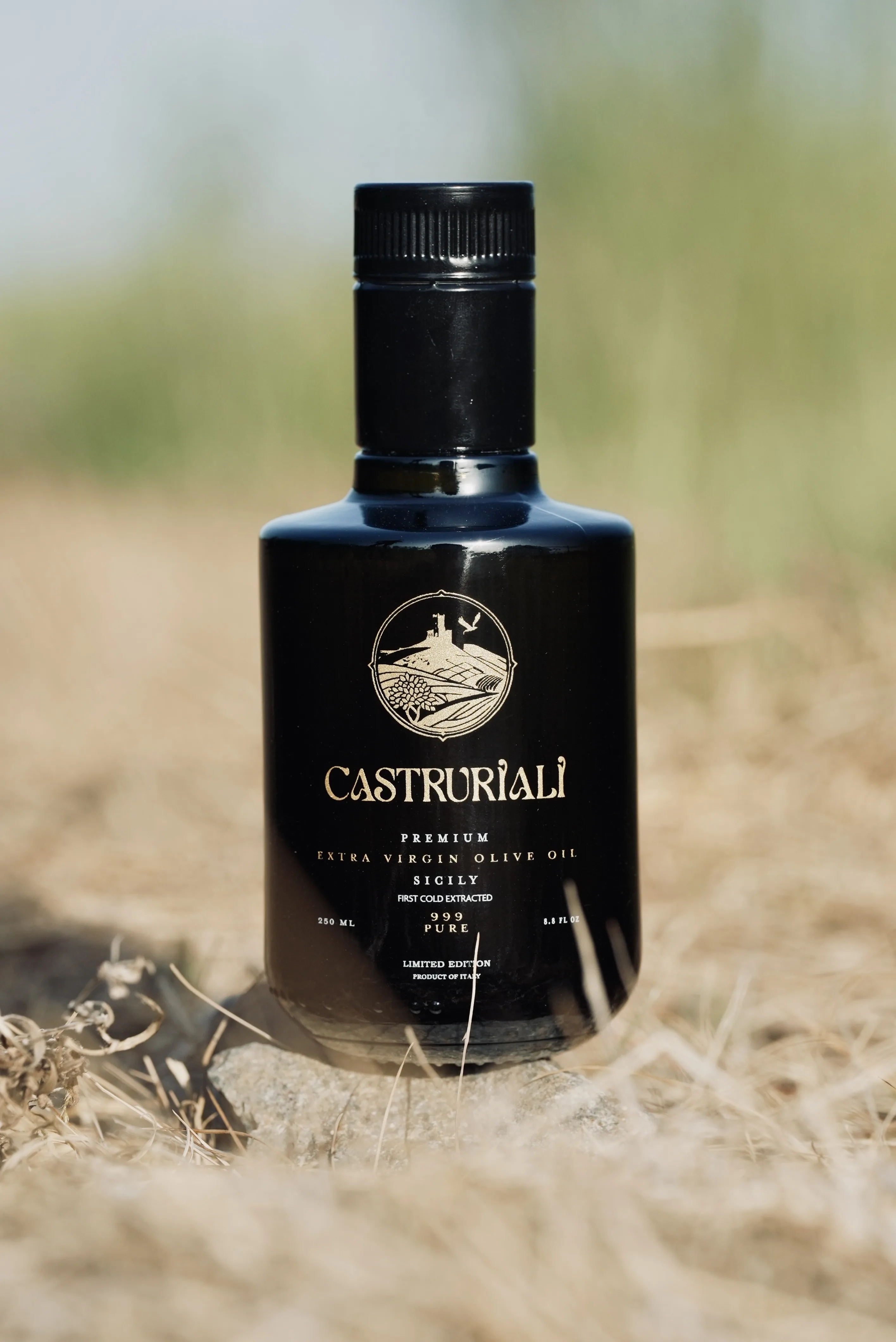
Every dish begins with a single pour.
Extra virgin olive oil is the thread through every recipe here: for frying, for sauces and above all poured raw at the end. Ours is 100% Sicilian, grown in the hills of Salemi and made in Castroreale, with the peppery finish of an early harvest.
Cooked in Castroreale.
Chef Enzo Oliveri cooks with Castruriali in the hills where it is made.
Enzo Oliveri
“You can taste the hillside in it — green, peppery, alive. I finish a plate with Castruriali the way my grandmother did: raw, generous, at the very last moment.”
Seared Sicilian swordfish in a crust of Bronte pistachio and toasted crumb, finished with a raw pour of Castruriali for grassy lift.
Meet Chef Enzo →Sicilian food, answered
What is the most famous Sicilian dish?
Arancine (or arancini), fried saffron rice balls, are the best-known Sicilian food around the world, along with cannoli, caponata and pasta alla Norma.
What makes Sicilian cooking different from the rest of Italy?
Sicily was ruled by Greeks, Romans, Arabs, Normans and Spaniards, and each left something in the kitchen. Sicilian food uses more sweet-and-sour, more fish, more almonds, citrus, saffron and raisins than the rest of Italy, and treats extra virgin olive oil as an everyday staple.
What do Sicilians cook with?
Extra virgin olive oil above all, with sheep’s-milk cheeses, durum wheat pasta and bread, tomatoes, aubergines, citrus, capers, almonds, pistachios and the fish of the surrounding seas.
Is it arancini or arancine?
Both are right. Palermo and western Sicily say arancina (plural arancine) and make them round; Catania and the east say arancino (plural arancini) and often make them cone-shaped.
Are Sicilian recipes vegetarian-friendly?
Many are. Caponata, panelle, pasta alla Norma, parmigiana, maccu and most salads are vegetarian, and several are vegan. Use the filters above to find them.
Which olive oil should I use for Sicilian recipes?
A fresh, peppery Sicilian extra virgin olive oil for anything raw: salads, salmoriglio, finishing pasta and soups. For deep-frying, many cooks use a lighter olive oil and keep their best bottle for the table.
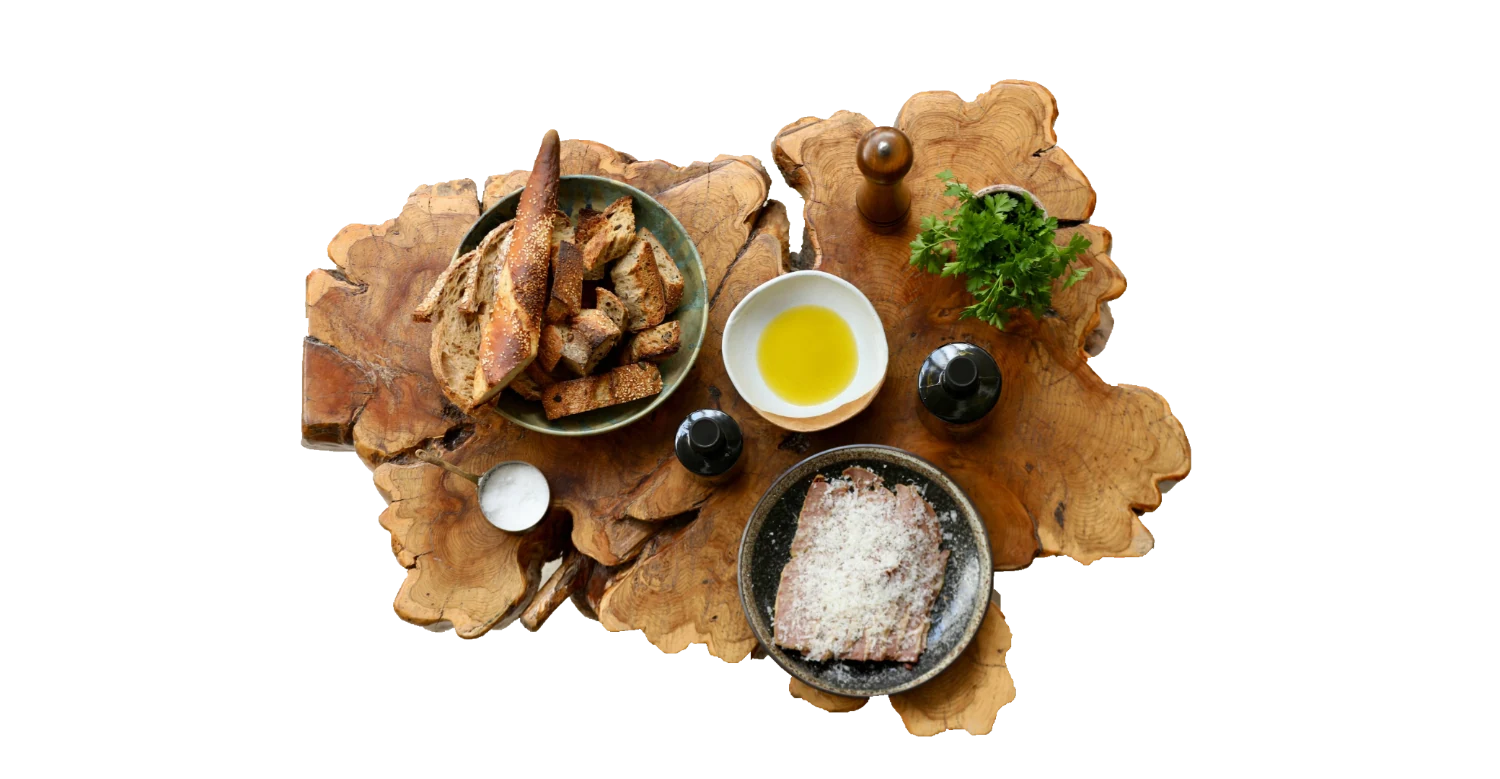
Bread, salt, a little cheese — and a generous pour of green gold.
Cook with oil that gives back.
Every bottle you pour into these dishes helps us reclaim abandoned Sicilian groves and protect rare native varieties.
Cook with itOlio extravergine di oliva Castruriali
The oil in every recipeProdotto a Castroreale, in Sicilia
Sicilian extra virgin olive oil from the 2024/2025 Early harvest, with the peppery finish of a fresh, high-polyphenol oil. Great Taste 2025.Olio extravergine da olive coltivate sulle colline di Salemi, in provincia di Trapani, prodotto e imbottigliato a mano a Castroreale. Raccolta precoce 2024/2025: Great Taste 2025, 410 mg/kg di polifenoli, analizzati da un laboratorio indipendente.